Summary
What the record shows
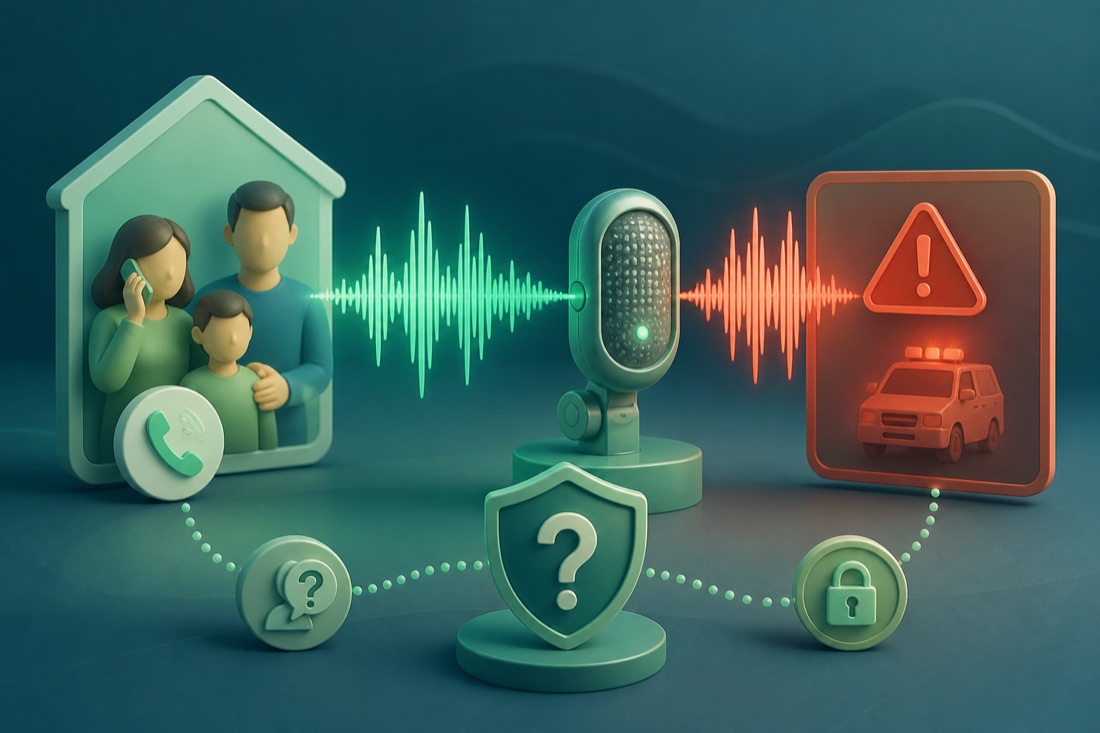
A caller claims that a relative is injured, detained or in immediate danger and demands secrecy and fast payment. Voice cloning can strengthen the illusion using a short sample gathered from public media or earlier contact.
The safest interruption is independent verification: hang up, call the person or another family member through a known number, and ask a private question or use a family code word.
Key findings
What is established and what is not
- A familiar-sounding voice is no longer sufficient identity proof.
- Secrecy, urgency and irreversible payment requests are central warning signs.
- Preserve the caller details and report the demand without circulating the cloned audio unnecessarily.
Response and denials
The other side of the record
The reviewed material describes a distributed pattern using changing accounts, numbers and sites. No single identifiable operator or attributable operator denial was located.
Some approaches misuse the identity of family members, employers, banks, police or military bodies. Those impersonated organisations are not treated as participants; verify any contact through an independently located official channel.
Global Scam Report evaluation
Summary assessment
Active impersonation technique with strong official support — high confidence. The existence of voice-cloning capability does not prove that every unusual call used AI; the payment and verification evidence remain central.
Reference record
Sources reviewed
- GovernmentUS Federal Trade Commission · Updated December 2025Scammers use fake emergencies to steal your moneyOpen source ↗
- GovernmentUS Federal Trade Commission · 20 March 2023Scammers use AI to enhance family-emergency schemesOpen source ↗
- GovernmentUS Federal Trade Commission · 17 November 2023Preventing harms from AI-enabled voice cloningOpen source ↗
- GovernmentUS Federal Trade Commission · Current guidanceFamily emergency scamsOpen source ↗
- GovernmentUS Federal Trade Commission · 2024FTC comment on voice cloningOpen source ↗
- GovernmentFederal Bureau of Investigation · Current guidanceThe grandparent scamOpen source ↗
- GovernmentFederal Bureau of Investigation · 20262025 Internet Crime ReportOpen source ↗