Summary
What the record shows
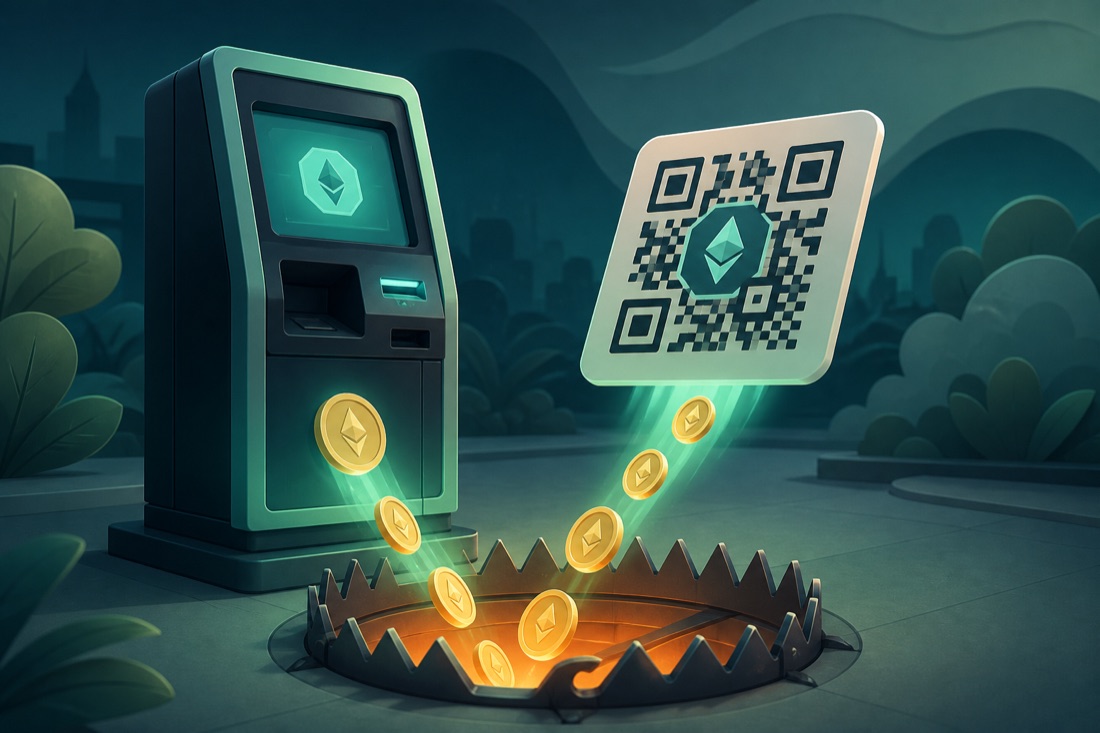
A supposed bank, police officer, technology worker or business tells the target to withdraw cash, visit a crypto kiosk and scan a supplied QR code. The code directs the purchased cryptocurrency to a wallet controlled by the offender.
The FBI’s 2025 report recorded increases in cryptocurrency ATM complaints and losses. Kiosk warnings are important: no legitimate authority requires payment through a crypto machine to fix an account or avoid arrest.
Key findings
What is established and what is not
- A QR code supplied by the caller controls the destination wallet; it does not protect the victim’s money.
- Stop if anyone stays on the phone while directing cash withdrawal and kiosk use.
- Retain the wallet address, transaction hash, receipts and caller details for reporting.
Response and denials
The other side of the record
The reviewed material describes a distributed pattern using changing accounts, numbers and sites. No single identifiable operator or attributable operator denial was located.
Some approaches misuse the identity of banks, police, technology companies and crypto services. Those impersonated organisations are not treated as participants; verify any contact through an independently located official channel.
Global Scam Report evaluation
Summary assessment
Active, high-loss payment mechanism used across several scam types — high confidence. Cryptocurrency kiosks have lawful uses; the scam assessment concerns coercive or deceptive instructions and the destination of funds.
Reference record
Sources reviewed
- GovernmentUS Federal Trade Commission · Current guidanceWhat to know about cryptocurrency and scamsOpen source ↗
- GovernmentFederal Bureau of Investigation · 22 September 2025Increase in gold-bar and bulk-cash courier scamsOpen source ↗
- GovernmentUS Federal Trade Commission · Current handbookImpersonation scams and cryptocurrency paymentsOpen source ↗
- GovernmentFederal Bureau of Investigation · 20262025 Internet Crime ReportOpen source ↗
- GovernmentUS Federal Trade Commission · February 2025Consumer Sentinel Network Data Book 2024Open source ↗
- GovernmentUS Federal Trade Commission · 10 March 2025Top scams of 2024Open source ↗
- GovernmentUS Federal Trade Commission · May 2025How to avoid a scam — fraud handbookOpen source ↗