Summary
What the record shows
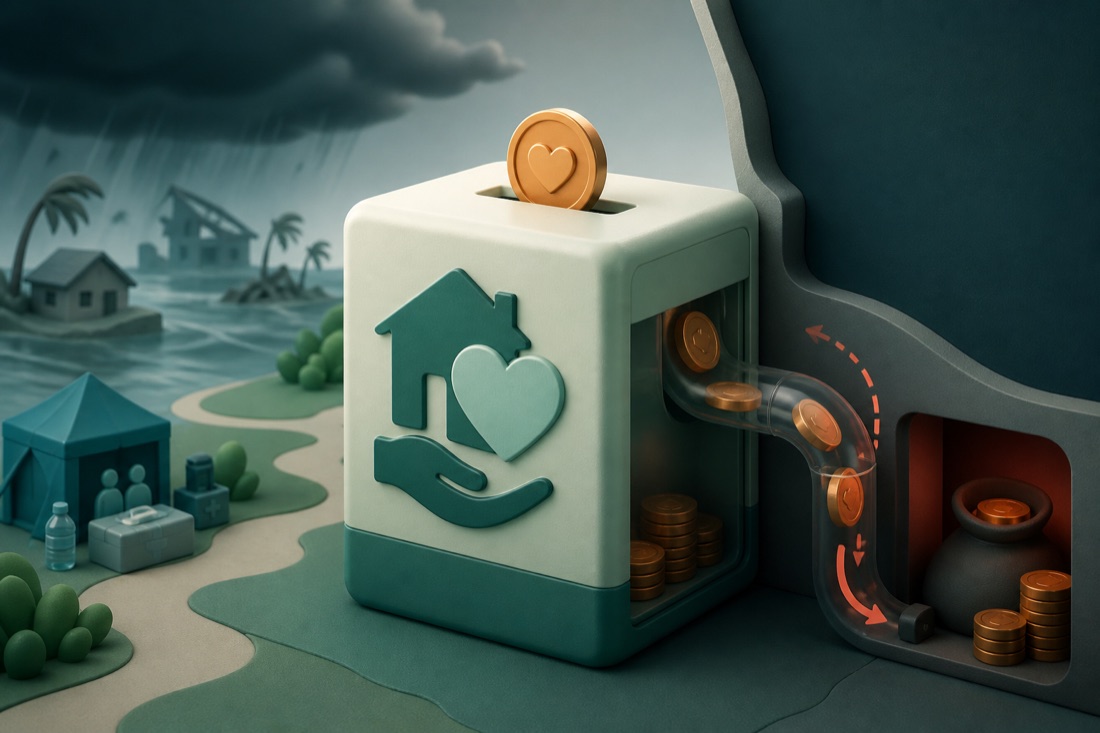
Fraudulent appeals may copy the name and imagery of a real charity, invent a beneficiary or use a crowdfunding page that obscures where money goes. They often appear immediately after a disaster or widely shared personal tragedy.
Verification is safest before clicking or donating: search the organisation independently, check registration and history, and understand whether the page benefits a charity, an individual organiser or an unknown recipient.
Key findings
What is established and what is not
- Urgency and emotional imagery are not substitutes for identity, registration and destination-of-funds checks.
- Requests for cryptocurrency, gift cards, cash or transfers offer fewer recovery options.
- A real charity’s name may be misused; the charity should not be blamed solely because it is impersonated.
Response and denials
The other side of the record
The reviewed material describes a distributed pattern using changing accounts, numbers and sites. No single identifiable operator or attributable operator denial was located.
Some approaches misuse the identity of recognised charities, disaster agencies or beneficiaries. Those impersonated organisations are not treated as participants; verify any contact through an independently located official channel.
Global Scam Report evaluation
Summary assessment
Active, event-driven impersonation pattern — high confidence. Individual appeals require direct verification, and new or small charities should not be assumed fraudulent merely because they lack a long history.
Reference record
Sources reviewed
- GovernmentInternal Revenue Service · 2 April 2026Dirty Dozen tax scams for 2026Open source ↗
- GovernmentInternal Revenue Service · 5 March 2026Dirty Dozen: watch for fake charitiesOpen source ↗
- GovernmentInternal Revenue Service · 26 November 2024Be cautious of scammers targeting disaster donationsOpen source ↗
- GovernmentInternal Revenue Service · 2022Donate carefully after a disaster to avoid scamsOpen source ↗
- GovernmentUS Federal Trade Commission · February 2025Consumer Sentinel Network Data Book 2024Open source ↗
- GovernmentUS Federal Trade Commission · 10 March 2025Top scams of 2024Open source ↗
- GovernmentUS Federal Trade Commission · May 2025How to avoid a scam — fraud handbookOpen source ↗