Summary
What the record shows
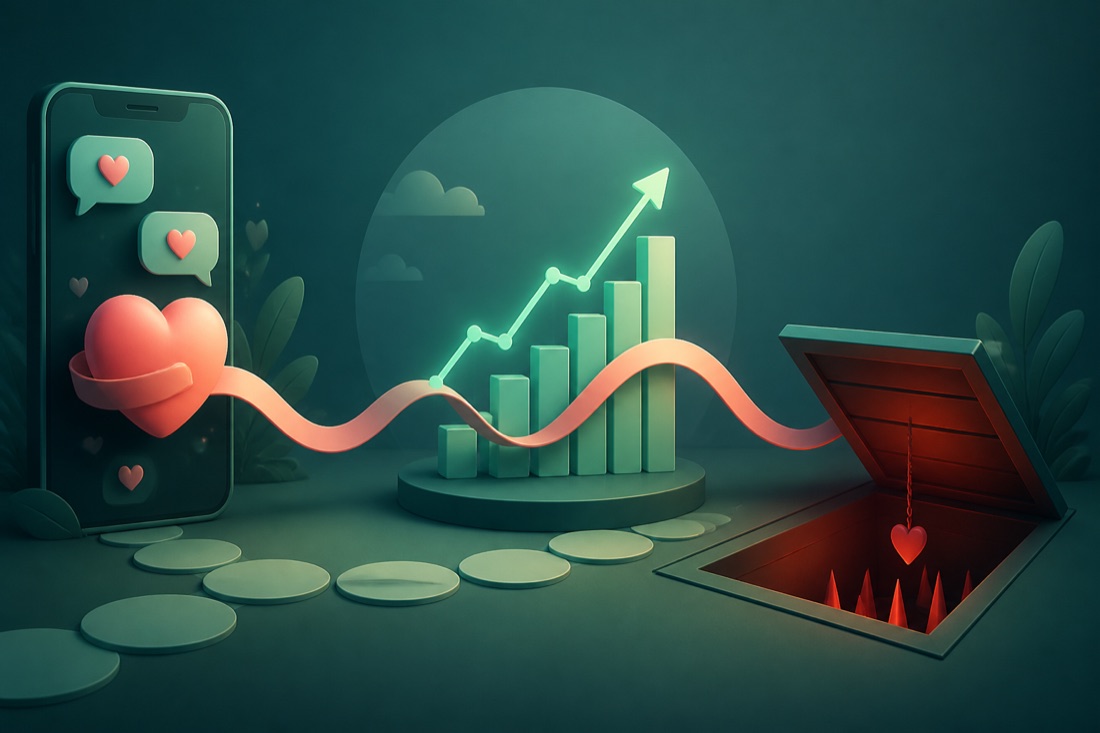
The approach may begin on a dating service, social network or an apparently accidental message. After sustained contact, the new friend or romantic interest introduces an investment opportunity and coaches the target through transfers to a site or wallet the offender controls.
A dashboard may show profits and allow a small withdrawal. Larger withdrawal attempts then trigger invented taxes, fees or verification payments, while the relationship is used to maintain trust.
Key findings
What is established and what is not
- The emotional relationship and the investment pitch are parts of one grooming sequence.
- Displayed account balances are not proof that assets exist or can be withdrawn.
- Do not invest on the direction of a person known only online; independently check licensing, custody and withdrawal conditions.
Response and denials
The other side of the record
The reviewed material describes a distributed pattern using changing accounts, numbers and sites. No single identifiable operator or attributable operator denial was located.
Some approaches misuse the identity of dating services, public figures, investment firms or crypto platforms. Those impersonated organisations are not treated as participants; verify any contact through an independently located official channel.
Global Scam Report evaluation
Summary assessment
Active, high-loss social-engineering pattern — high confidence. Friendly or romantic online contact is not itself evidence of fraud; the key risk is the engineered move into an unverified financial platform.
Reference record
Sources reviewed
- GovernmentUS Federal Trade Commission · 1 April 2026How to spot the top scams that start on social mediaOpen source ↗
- GovernmentFederal Bureau of Investigation · 11 February 2025Don’t let a romance scammer steal your heart and savingsOpen source ↗
- GovernmentUS Federal Trade Commission · Current consumer guidanceWhat to know about cryptocurrency and scamsOpen source ↗
- GovernmentFederal Bureau of Investigation · 20262025 Internet Crime ReportOpen source ↗
- GovernmentUS Federal Trade Commission · February 2025Consumer Sentinel Network Data Book 2024Open source ↗
- GovernmentUS Federal Trade Commission · 10 March 2025Top scams of 2024Open source ↗
- GovernmentUS Federal Trade Commission · May 2025How to avoid a scam — fraud handbookOpen source ↗