Summary
What the record shows
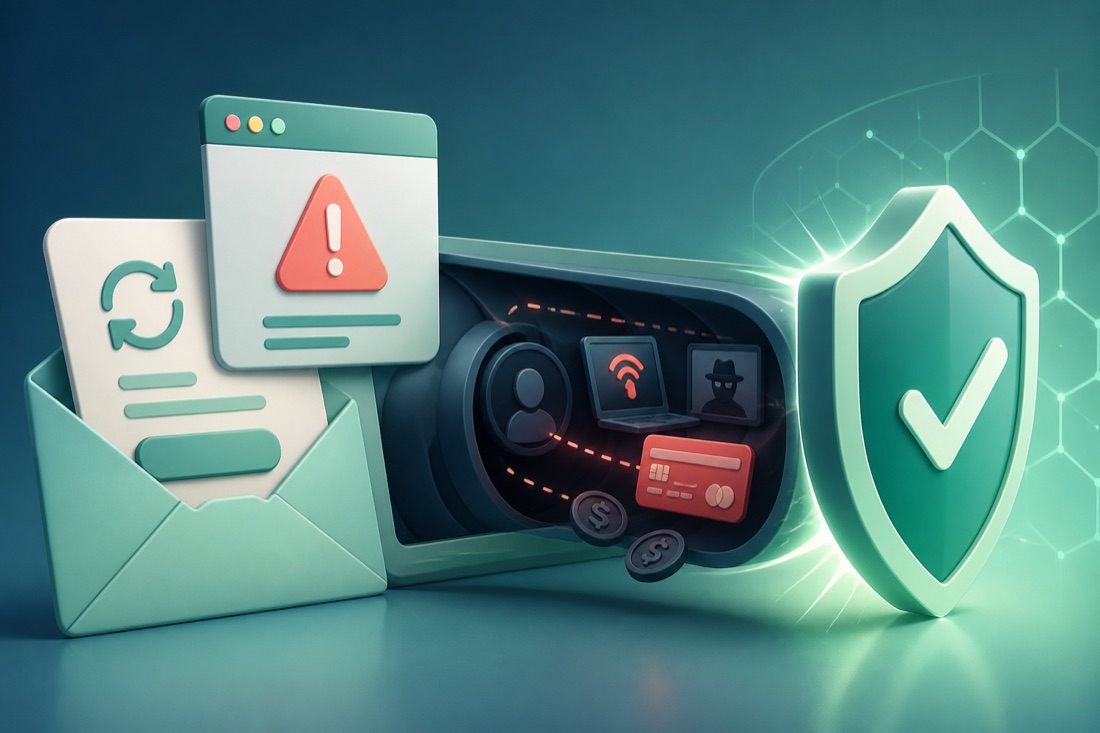
An email, browser pop-up or text claims that an expensive subscription has renewed. The recipient is urged to call immediately to cancel. The responder then requests remote computer access, online banking access or a payment to correct an invented refund error.
The invoice may contain no real charge at all; its purpose is to make the recipient initiate contact. Check the bank or genuine provider account directly instead of using the notice’s number or link.
Key findings
What is established and what is not
- An invoice is not proof that a transaction occurred; verify the account statement independently.
- No refund requires remote access to online banking or a transfer to “return” excess money.
- Close unsolicited pop-ups and use known support channels.
Response and denials
The other side of the record
The reviewed material describes a distributed pattern using changing accounts, numbers and sites. No single identifiable operator or attributable operator denial was located.
Some approaches misuse the identity of security vendors, marketplaces, banks or technology support brands. Those impersonated organisations are not treated as participants; verify any contact through an independently located official channel.
Global Scam Report evaluation
Summary assessment
Active, mature tech-support and refund-scam pattern — high confidence. Billing errors and legitimate renewals exist, so the decisive evidence is the independently verified transaction and support channel.
Reference record
Sources reviewed
- GovernmentUS Federal Trade Commission · Current guidanceHow to spot, avoid and report tech-support scamsOpen source ↗
- GovernmentUS Federal Trade Commission · Pass It On guidanceTech-support scamsOpen source ↗
- GovernmentUS Federal Trade Commission · Current guidanceFree trials, auto-renewals and negative-option subscriptionsOpen source ↗
- GovernmentFederal Bureau of Investigation · 31 March 2025Government and law-enforcement impersonation warningOpen source ↗
- GovernmentFederal Bureau of Investigation · 20262025 Internet Crime ReportOpen source ↗
- GovernmentUS Federal Trade Commission · February 2025Consumer Sentinel Network Data Book 2024Open source ↗
- GovernmentUS Federal Trade Commission · May 2025How to avoid a scam — fraud handbookOpen source ↗